Use Cases
Tech stacks, vendor relationships, partner ecosystems, and the changes between them. Here's what that data unlocks for every team that touches revenue.
Build target account lists based on what companies actually run, not what they told a survey two years ago. Filter your total addressable market by tech stack to find companies that look like your best customers.
Then time your campaigns to technology adoption moments. When a company starts using a complementary tool, they're more likely to need yours. When they drop a competing product, they're actively evaluating alternatives. Layer in partner ecosystem signals: companies with active integration ecosystems in your category are higher-value targets because they've already committed to the platform approach.
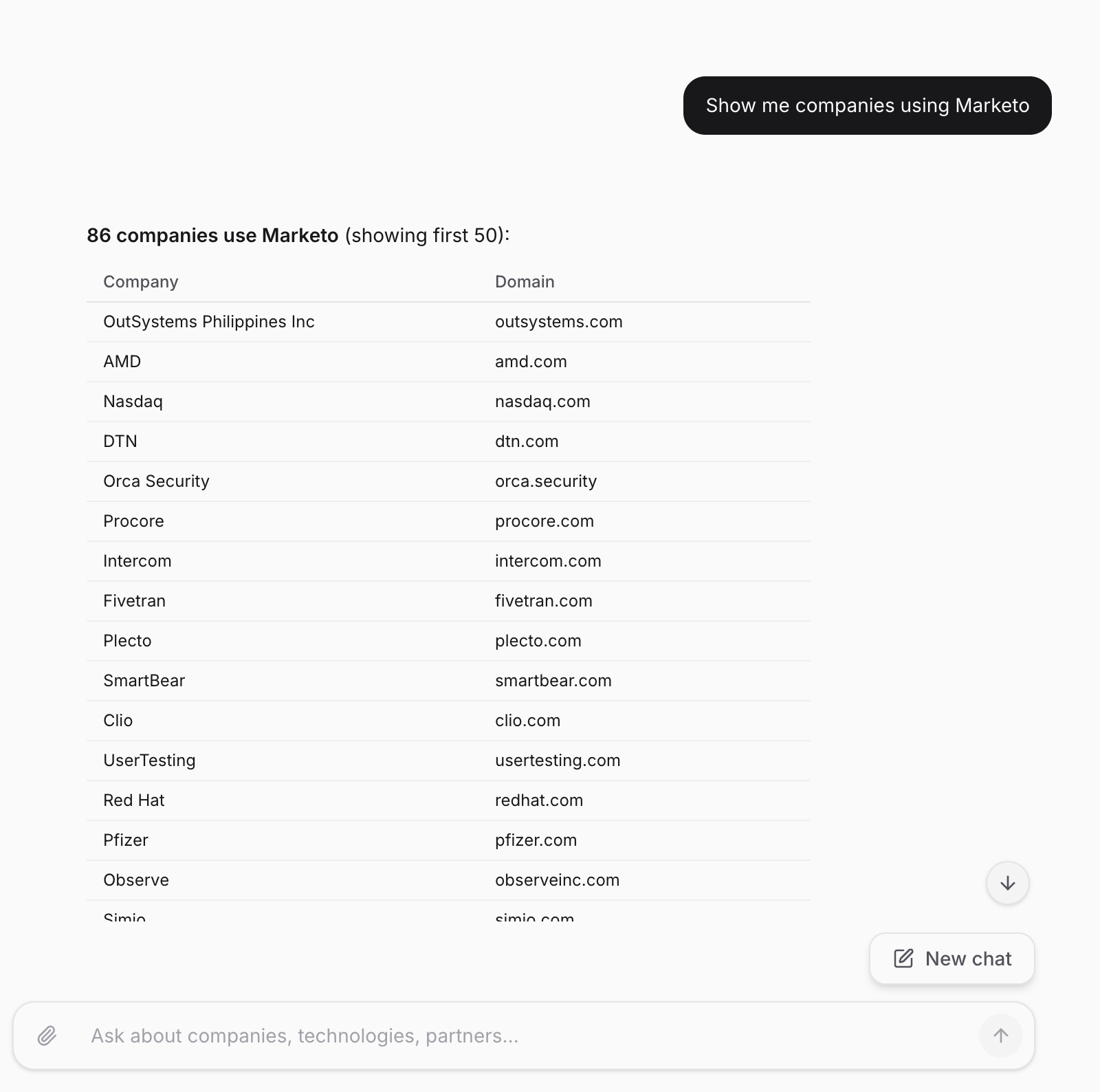
Give every rep context before every call. When your AE opens an account, they should already know what CRM the prospect uses, what marketing tools they've deployed, which vendors they pay, and whether they just switched off a competitor. That's the difference between a cold open and a relevant conversation.
For RevOps teams, Trace data helps prioritize outbound by technology fit and ecosystem alignment. Instead of working a static list, reps focus on companies whose tech stack and partner ecosystem signal they're a good fit and actively making buying decisions.

Partnership teams have always been stuck doing manual research: scanning integration directories, reading partner announcements, manually tracking who works with whom. Trace structures all of that into queryable data.
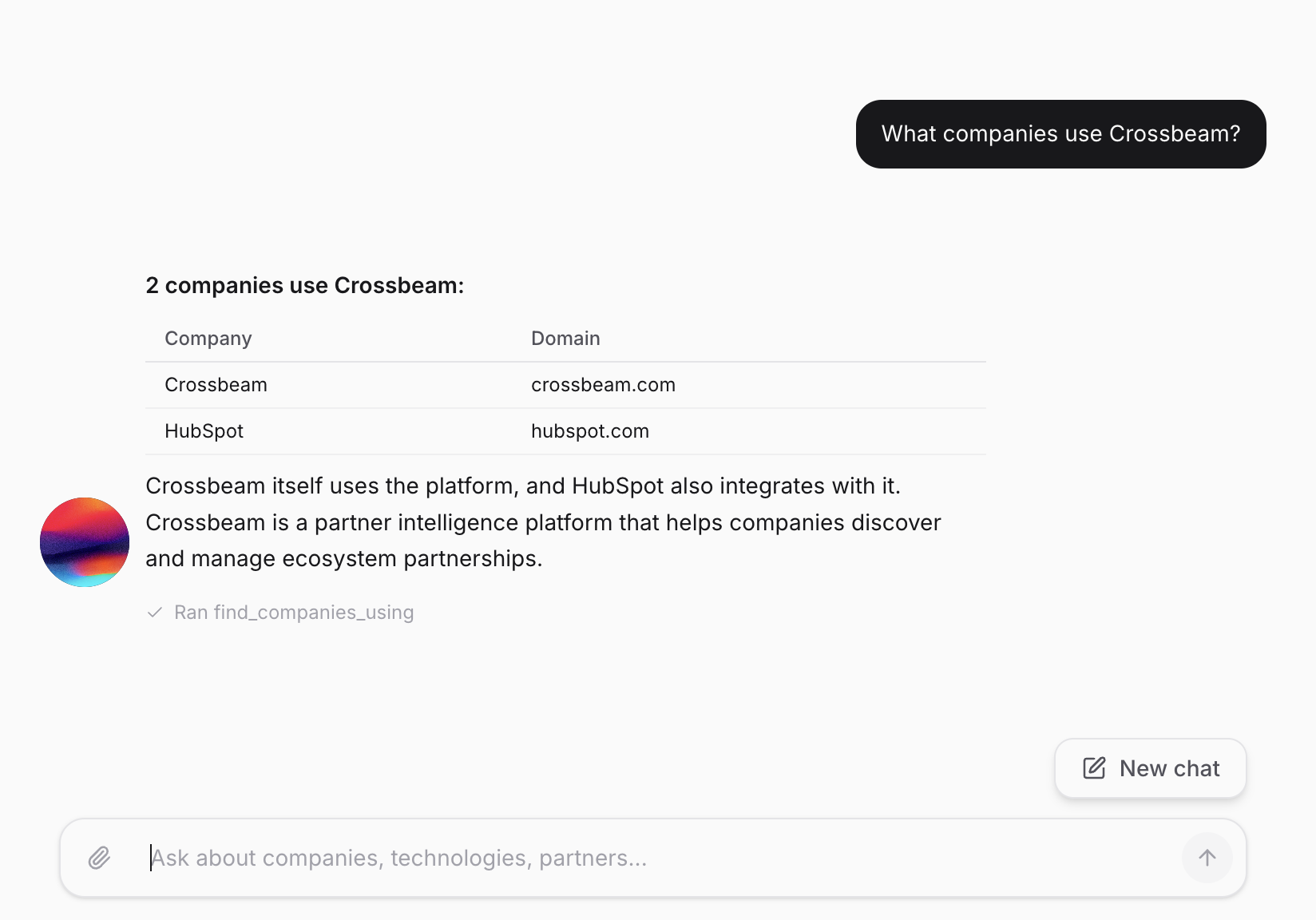
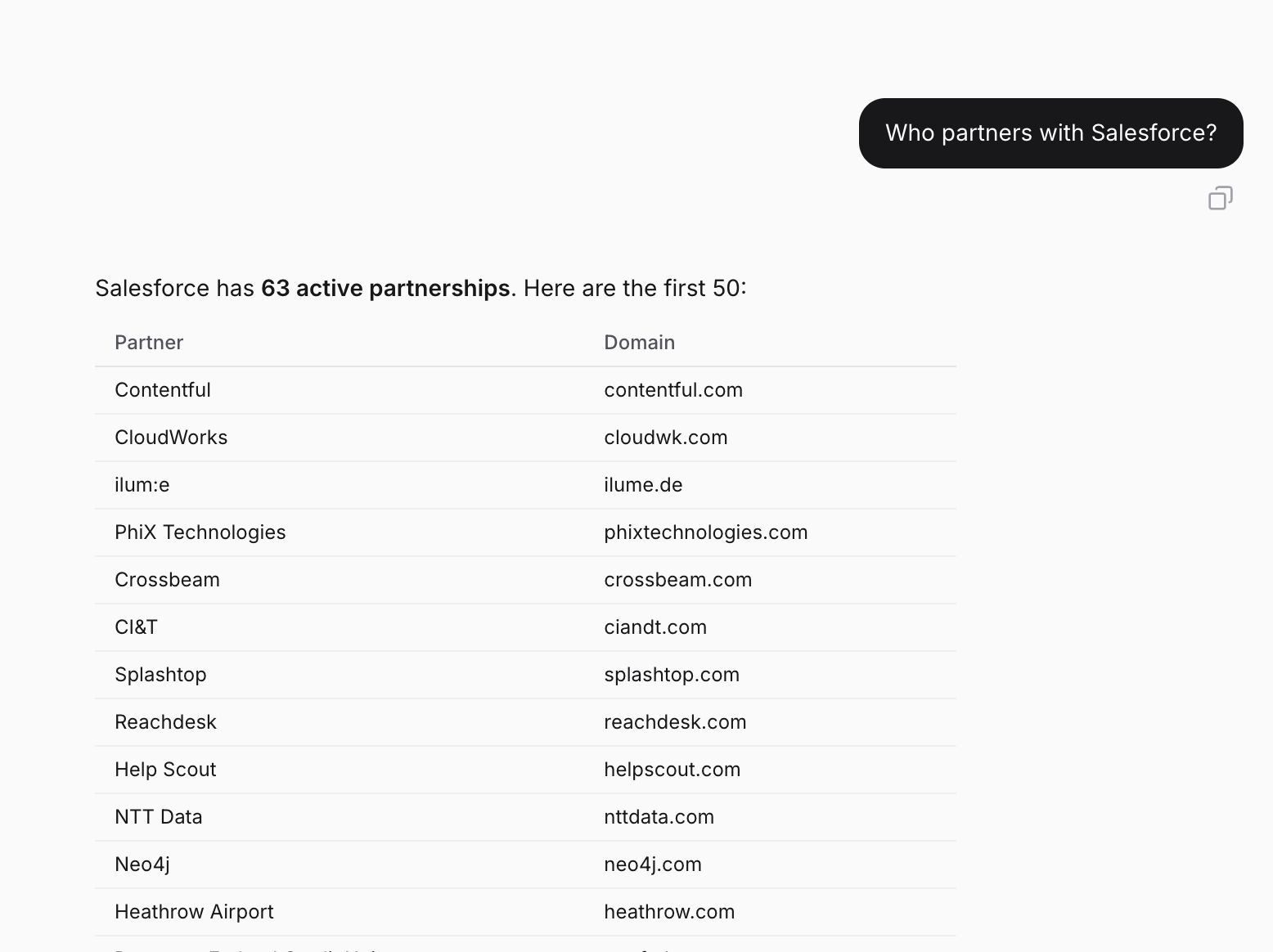
Map which companies in your market have the most active partner ecosystems. Identify potential co-sell targets by finding accounts that already integrate with your technology partners. Track new partnerships as they're announced. When a prospect joins an ecosystem you're part of, that's a signal your sales team should act on.
For companies evaluating potential technology partnerships, Trace provides ecosystem intelligence at a scale that manual research can't match: who are the most-integrated platforms in a category? Which partnerships are growing fastest? Where does your integration ecosystem overlap with your competitors'?

Track which technologies are gaining or losing market share across your industry. See adoption trends over time, based on what companies are actually running right now, not analyst projections.
Benchmark your customers' tech stacks against your ICP. Identify which technologies tend to cluster together. Spot emerging tools before they show up in analyst reports. And now, with partner ecosystem data, track which vendors are building the strongest partnership networks, a leading indicator of market position.

Hedge funds tracking the trajectory of a SaaS company can measure its customer base growth by watching where its technology footprint appears and how its partner ecosystem is expanding. VC firms can validate traction claims against observable adoption and partnership data. PE firms can benchmark a portfolio company's market position by both technology adoption and ecosystem breadth.
Trace provides macro-level technology adoption trends and ecosystem intelligence across industries, company sizes, and geographies. It's observable market data: verifiable, not self-reported.

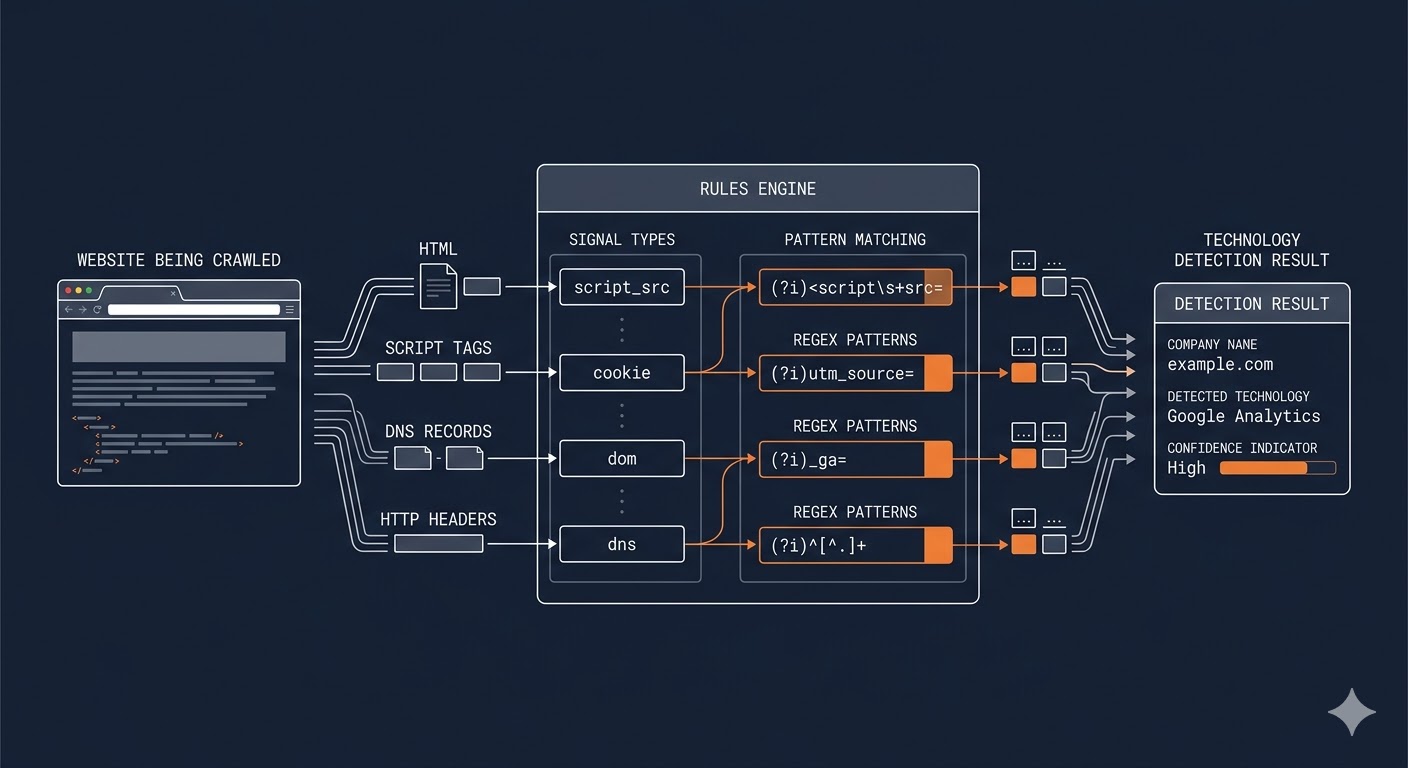
A company adds a new analytics tool. Another drops their marketing automation platform. A third joins a new integration ecosystem for the first time. A fourth lists a specific technology in their job postings.
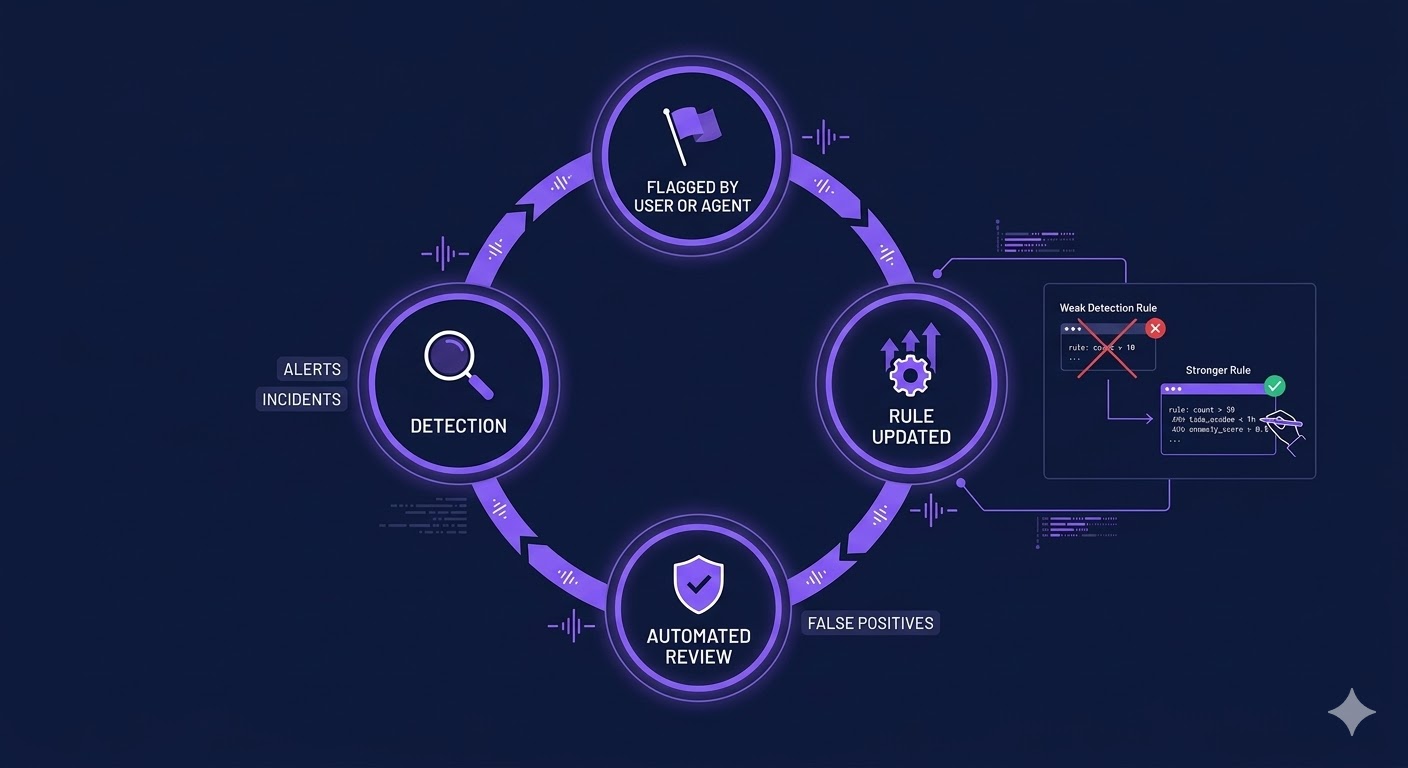
These are all buying signals, and Trace detects them automatically by comparing current data against historical baselines. New technology adoptions, vendor switches, partner ecosystem changes, and infrastructure shifts all surface as structured change signals you can act on.
Pipe these signals into your outbound sequences, your ABM campaigns, or your AI agents. The companies making active technology and ecosystem decisions are the companies most likely to buy from you right now.

Start free and see what Trace surfaces for the companies you care about.
Start Free